
Home / Jackpot Cards

Jackpot Cards in Burning Hot: How the Progressive Works

Guide By Updated 5 Sep 2026 1 article in section
Reviewed game
Burning Hot slot Burning Hot (EGT / Amusnet)
Play the game
18+ | T&C apply | Play responsibly

Jackpot Cards is EGT's network mystery progressive layered on Burning Hot - four levels by suit (Clubs, Diamonds, Hearts, Spades). It can trigger at random after any spin, then you flip a 12-card grid for three matching suits. Here is how eligibility and the pick actually work.

The four-suit progressive, explained

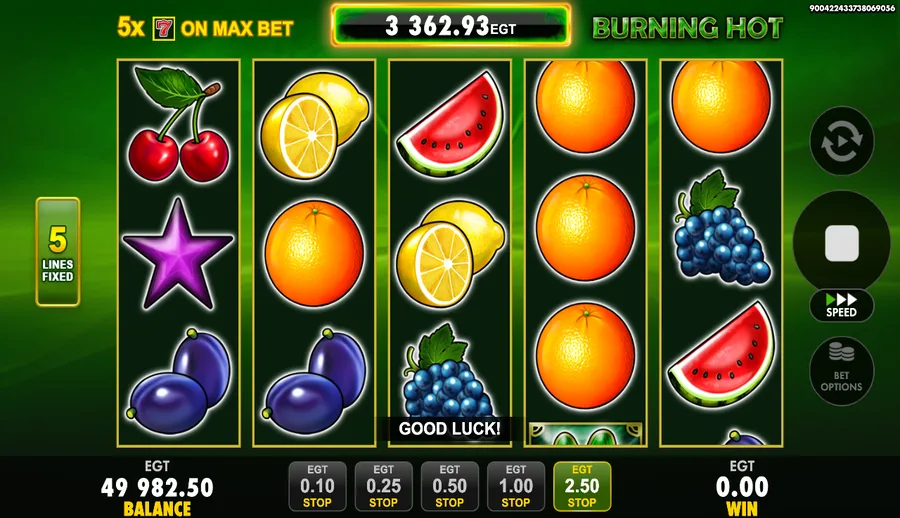
Burning Hot base reels running on virtual credits in the demo
The demo running on virtual credits; the progressive sits on top of this base game.

You don't need a special symbol combination to win it, and you can't line it up on purpose. Jackpot Cards is EGT's shared network mystery progressive, and it sits on top of Burning Hot as four suit-tiered prizes: Clubs, Diamonds, Hearts and Spades, with Spades as the largest. It can fire at random after any paid spin, so any qualifying wager is a ticket into the draw whether the reels themselves paid or not.

Here's the part players miss. This progressive is funded by a slice of every networked bet across all the EGT and Amusnet fruit titles that carry it, so it grows independently of anything happening on your five paylines. It's a separate prize pool, not part of the base game's 3,000x line-bet ceiling.

How the trigger and the card pick work

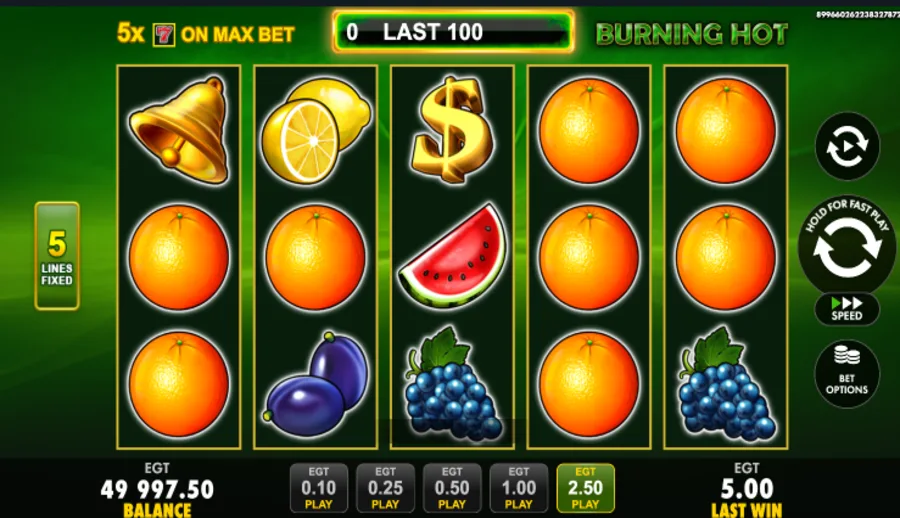
Burning Hot reels with the Jackpot Cards progressive meter above the grid

The trigger is random. After any paid spin the game can drop you into the Jackpot Cards screen, and no scatter count, wild or winning line is required to get there. It's a mystery award, so it can land on a losing spin just as easily as a winning one.

Once it starts, the reels fade back and a grid of 12 face-down cards appears. You keep flipping cards one at a time, and each card shows a suit. Reveal three cards of the same suit and that suit's jackpot level is paid straight to your balance. Because the draw is fixed to reveal one of the four tiers, you'll always leave the round with one of the four prizes once it's triggered, most often the lowest, Clubs tier. There's no skill in which card you tap, and the outcome is decided by the network, not by your choices at the grid.

We loaded the free demo to watch this in practice. Across the rounds we ran, the trigger arrived without warning and on spins that had nothing special on the reels, which lines up with a genuine mystery award rather than a symbol-gated bonus. The card-flip animation is short, and the suit that pays is the first to reach three matches, so the whole sequence is over in seconds. It's presentation, not a decision point.

The four levels at a glance

The suits map to size in a fixed order, from Clubs at the bottom to Spades at the top. The actual cash figure behind each tier isn't a set number; it moves with the network pool and the operator's configuration, which is why the table below describes relative size rather than a value we can quote (1).

LevelSuitRelative size
1 (lowest)ClubsSmallest and most frequent tier
2DiamondsSecond tier, mid-low
3HeartsThird tier, mid-high
4 (highest)SpadesTop jackpot, largest and rarest

Exact amounts vary by network and by operator, so treat any figure you see advertised in a specific lobby as that lobby's live pool at that moment, not a fixed property of the game.

Eligibility and the minimum-bet question

Your chance of being drawn into Jackpot Cards scales with your stake. Bigger bets buy more eligibility and better trigger odds, because the mystery draw weights entries by how much you've wagered. That's the honest trade-off: the progressive rewards larger wagers, and small-coin play feeds the pool without giving you much of a realistic shot at the top tier.

Some operators go further and set a minimum qualifying bet, below which you're not entered at all. The exact Burning Hot threshold isn't published, and it can differ between casinos, so we won't put a number on it. If the progressive matters to you, check the game's info screen or the operator's terms in the lobby before you spin, and confirm your stake actually qualifies.

This is the single most overlooked detail on the whole slot. A player who drops to the smallest coin size to stretch a session may quietly drop out of jackpot eligibility entirely, funding the pool for everyone else without a seat at the draw. If you have no interest in the progressive, that's a perfectly reasonable way to play. If you do want it, the low-stake, long-session approach works against you, and you'll want to size your bet to the operator's qualifying rule instead.

Why it's separate from the base game

Keep the two pools apart in your head. The base game tops out at up to 3,000x your line bet from five red 7s on a payline, and that's the ceiling for the reels themselves. Jackpot Cards is a network prize funded by a small slice of every bet placed across the whole shared pool of EGT and Amusnet titles, which is why it can pay far more in absolute terms than the base maths allows.

It also means the progressive isn't a "feature" you unlock through good play. It's an overlay running on the network, layered on the slot rather than built into its RTP in the way free spins would be. On newer 6-reel EGT Digital editions the same idea appears under the "Clover Chance" banner, which is a branded progressive-jackpot layer rather than a different game; you can see how those releases fit together on the variants page.

Want to see how the trigger looks without risking a stake? The Jackpot Cards overlay is live in the free play version, so you can load the demo and watch a random trigger without depositing. When you're ready for the real pool, the licensed operators we cover on the online casinos page carry Amusnet fruit titles, though availability varies by region and operator.

The reality check

There's nothing you can do to influence Jackpot Cards. The trigger is random, the card flips are cosmetic, and no strategy, bet pattern or "due" theory changes the odds. It's a mystery draw weighted by stake, full stop.

That weighting is itself the catch. To have a meaningful shot at the higher tiers you generally need to bet more, which pushes up your cost per hour and can outrun what a casual budget can sustain. The genuine downsides are worth stating plainly: you can't chase it, the top-tier odds are long, the exact qualifying bet and the win frequencies are unpublished, and the money that funds the pool comes out of everyone's returns whether you ever trigger it or not. Treat it as a rare bonus, not a plan.

Jackpot Cards FAQ

How does Jackpot Cards trigger?

Randomly, after any paid spin. No symbol combination, scatter count or winning line is needed; it's a mystery award that can land on a losing spin too.

How many jackpot levels are there?

Four, tied to card suits: Clubs, Diamonds, Hearts and Spades. Clubs is the smallest and most frequent, Spades the largest and rarest.

Is there a minimum bet to qualify?

Some operators set one, and eligibility scales with your stake. The exact Burning Hot threshold isn't published, so check the game info or operator terms before spinning.

Can I win Jackpot Cards and the 3,000x at the same time?

Yes, they're separate pools. The 3,000x line max comes from the reels; Jackpot Cards is a network progressive that pays independently of the base game.

Can I improve my odds of triggering it?

No skill or pattern helps. The draw is random and weighted by stake, so higher bets raise eligibility, but nothing guarantees or "times" a trigger.

Does the demo include Jackpot Cards?

Yes, the overlay runs in free play, so you can watch a random trigger and card pick without depositing. Real-money pools need a licensed operator.

Sources

  • (1) Official game and provider information: Amusnet.
  • (2) Supplier licensing and regulated-market status: Malta Gaming Authority (Amusnet supplier licence MGA/CRP/252/2013).

Pages in this section